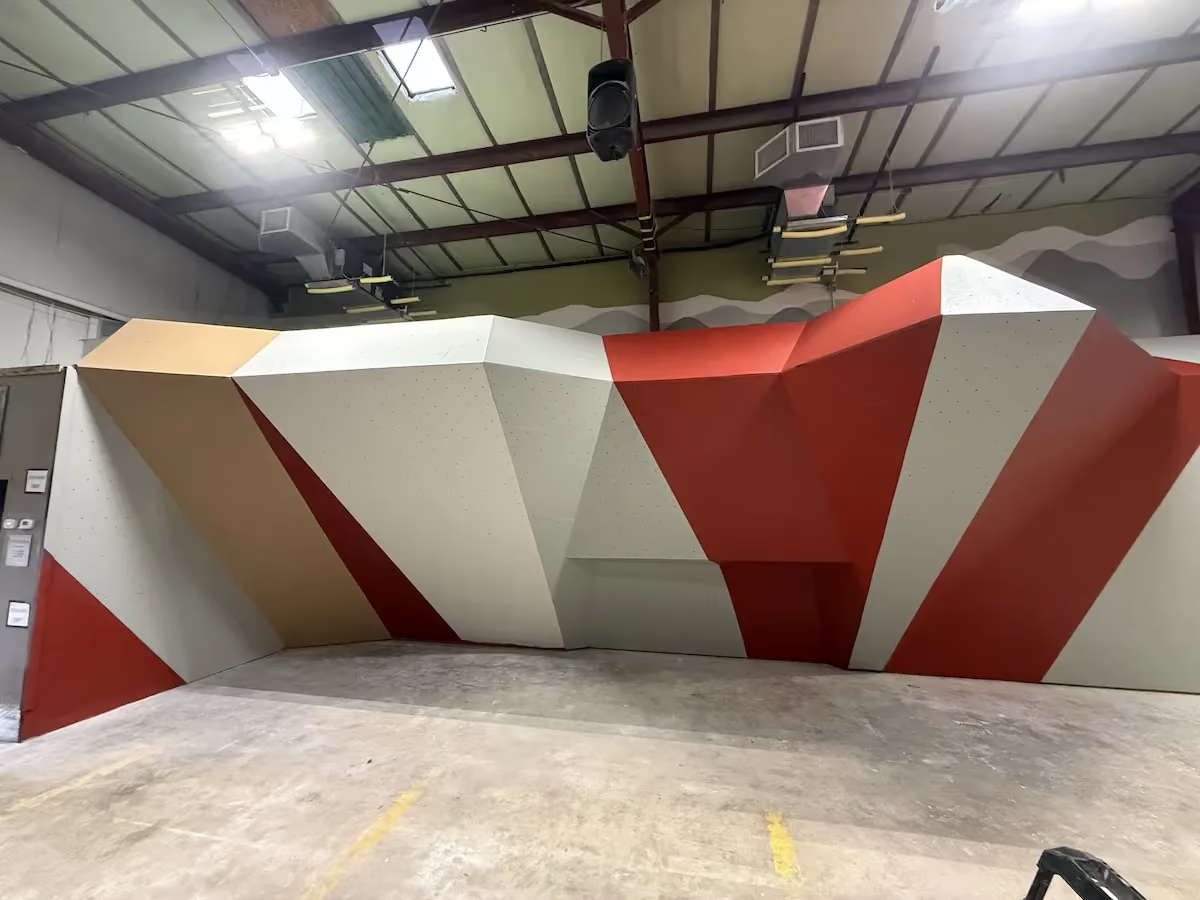
Refurb or Rebuild? What Actually Pays Off
Scroll through enough climbing gym updates, and you’ll notice a familiar pattern. A new facility opens. An older one announces a full redesign. Somewhere in the middle, one important question gets missed:
Do you actually need a new wall?
For many operators, universities, and recreation centers, the default assumption is simple. If the wall feels dated, underused, or worn, replacement must be the answer. Start over. Build something new. Signal change.
But in today’s market, where many operators are facing tighter budgets and closer scrutiny on capital spending, that instinct deserves a closer look. Sustainability considerations are also playing a larger role in facility decisions.
More often than not, the smarter move is not rebuilding. It’s rethinking what you already have.
The Real Cost of Starting Over
A new climbing wall is a major investment, not just in dollars, but in time, disruption, and risk.
The obvious costs are easy to spot:
- Design and engineering
- Fabrication and installation
- Permitting and compliance updates
The hidden costs are usually harder to account for upfront:
- Facility downtime that can stretch for several weeks — and longer on especially complex projects
- Member churn during closure
- Staff retraining and operational resets
- The possibility that “new” still does not solve the real problem
In a market where many gyms are already managing tighter margins and more selective consumer spending, those risks add up quickly.
A rebuild is not just a project. It is a reset button, and not every facility needs one.
What Refurbishment Really Includes
Refurbishment is not the same as a cosmetic patch. Done well, it is a structural and experiential upgrade that extends the life and performance of an existing wall.
That can include:
- Surface refinishing or retexturing
- A redesigned hold and route ecosystem
- Panel replacement or reinforcement
- Layout adjustments that improve flow and capacity
- Safety upgrades such as anchors, auto-belays, or fall zones
In other words, refurbishment is not about preserving the past. It is about reshaping what already exists so it performs better.
For most users, the result can feel every bit as compelling as something brand new.
Refurbishment Often Delivers the Better ROI
This is where the decision usually becomes clearer.
A full rebuild requires a large capital expenditure concentrated into a single moment. It is a significant upfront commitment, and the return often takes longer to realize.
Refurbishment offers a different path. It typically:
- often costs substantially less than full replacement
- can be phased to reduce operational disruption
- can extend the lifespan of a sound existing structure by years — in some cases by a decade or more — when the underlying wall is still structurally viable.
- improves ROI by upgrading performance without restarting the full investment cycle
Just as importantly, refurbishment aligns with the way facilities are operating today: with a stronger focus on efficiency, resilience, and return, not just expansion.
You are not chasing something new for its own sake. You are making the most of what you already have.
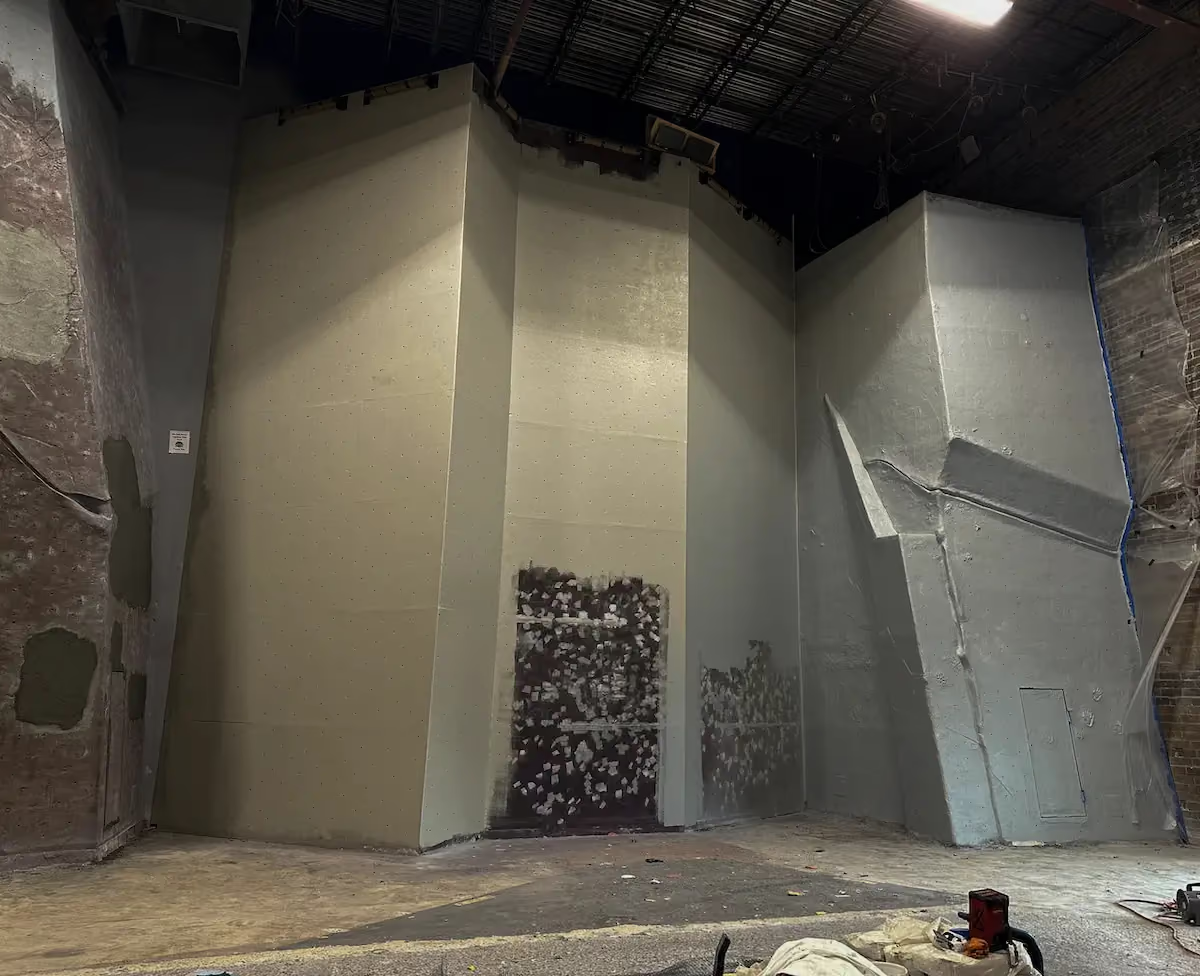
Will It Feel New Enough?
This is often where the hesitation lives.
Operators worry that members will notice the difference. They worry that a refreshed wall will not create the same excitement as a new build, or that perception will matter more than performance.
But climbers do not judge value by a construction date. They respond to what the experience feels like in practice:
- Route quality
- Movement variety
- Texture and realism
- A sense that the space continues to evolve
A well-executed refurbishment can improve all of those factors.
In many facilities, the real issue is not the wall itself. It is stagnation in routesetting, layout, or user flow. Refurbishment addresses those friction points directly without requiring a complete teardown.
New is not always what people want.
Better is.
Sustainability Now Shapes the Decision
Sustainability used to be treated like a marketing benefit that came after the project was done. That is no longer the case.
Today, developers, universities, and municipalities are often expected to justify environmental impact before a decision is made. Materials, waste, and lifecycle are now part of the conversation from the start.
Refurbishment speaks directly to that shift because it can mean:
- Less material waste
- A reduced manufacturing footprint
- Lower transportation and installation impact
- A longer lifecycle for existing infrastructure
In many cases, refurbishing is not only more cost-effective. It is also the more responsible option.
And increasingly, that matters to stakeholders.
When a Rebuild Really Is the Right Call
This is not an argument against new construction. In some situations, rebuilding is clearly the better choice.
That is often true when you are dealing with:
- Structural limitations in the existing wall
- A facility that was never designed for current demand
- A major repositioning, such as adding ropes to a bouldering-only space
- Outdated systems that cannot meet modern safety standards
In those cases, a rebuild creates possibilities that refurbishment cannot.
The mistake is not rebuilding when it is needed. The mistake is treating rebuilding as the default answer.
Why Optimization Matters More Than Expansion Right Now
The climbing industry has changed.
In the early 2020s, growth often meant new builds, bigger footprints, and expansion into new markets. Today, many operators are being asked to do more with the facilities they already have.
That means focusing on priorities like:
- Improving retention, not just acquiring new users
- Increasing throughput without expanding the footprint
- Enhancing the experience without restarting the entire facility
Refurbishment fits that shift well.
It is not about scaling outward. It is about refining what already works and improving what does not.
The Smarter First Question
So, should you refurbish or rebuild?
A better question is: What are you actually trying to fix?
If the answer is:
- “Our wall feels outdated.”
- “Engagement has plateaued.”
- “We need to refresh the experience.”
Then refurbishment is likely the smarter move.
If the answer is:
- “Our space no longer works.”
- “We have outgrown the facility entirely.”
- “We need a fundamentally different offering.”
Then a rebuild may be the right next step.
Most facilities fall somewhere in between. That is exactly where refurbishment deserves a serious look.
A Better First Step
Before committing to a full rebuild, take a closer look at what is already there.
Not just the structure, but the potential.
In many cases, the wall itself is not the real limitation. The strategy around it is.
And that is often what creates the biggest opportunity.