Why Climbing Gyms Still Matter in the Era of At-Home Walls
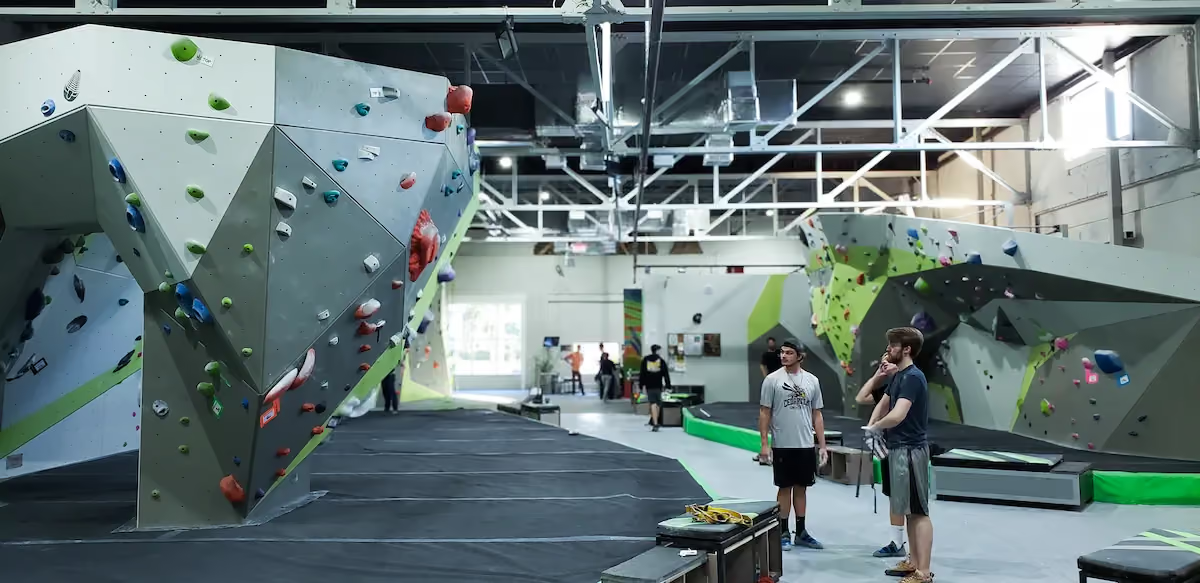
Home Walls vs. Climbing Gyms: What You’re Really Choosing
Scroll long enough through photos of garage setups and backyard builds, and the question starts to feel inevitable:
Do you still need a climbing gym?
Today, it’s easier than ever to build a home wall. Training apps are dialed. Boards are smarter. Space-efficient systems make it possible to climb hard without ever leaving your house.
But framing this as a convenience question misses something more important.
Climbing has never been just about access to holds.
Climbing Was Built on Community—Not Convenience
Long before training boards and LED systems, climbing culture was shaped in places like Camp 4 in Yosemite. Places like Yosemite’s Camp 4 helped shape modern climbing culture, with figures such as Royal Robbins and Yvon Chouinard closely tied to that history.
That legacy still defines the sport today.
And in 2026, it matters more than ever.
We’re living through an era optimized for isolation. Across work, entertainment, and fitness, more routines now happen at home or on-demand — which can mean fewer built-in opportunities for face-to-face connection.
You can now train, work, and unwind—entirely alone.
Climbing gyms are one of the more reliable places where in-person interaction still happens naturally and repeatedly.
The Rise of Home Walls (And What They Get Right)
There’s no denying the value of home setups.
Board systems like MoonBoard, Tension Board, and Kilter Board — alongside training and assessment tools like Lattice — have changed how many climbers train. Spray walls and compact panel systems make serious training accessible in almost any space.
For focused progression, they’re incredibly effective:
- Consistent, repeatable movement
- Zero wait time
- Fully personalized sessions
For many climbers, they’re no longer a supplement. They’re the foundation.
But they also introduce a tradeoff that’s easy to overlook.
What Gets Lost Without Shared Space
When climbing becomes purely individual, something subtle starts to erode.
You lose:
- The unplanned conversation between attempts
- The shared problem-solving on a new set
- The quiet accountability of climbing alongside others
And over time, that loss compounds.
Performance can become isolated from purpose. Sessions become more efficient—but often less meaningful.
This isn’t just cultural nostalgia. It connects directly to a broader concept in social science: third places.
Why Climbing Gyms Function as “Third Places”
Sociologist Ray Oldenburg described third places as the environments that exist outside of home and work—the spaces where community naturally forms.
Ray Oldenburg described third places as informal gathering spaces beyond home and work—accessible, conversation-friendly environments where regulars and newcomers can mix.
The best climbing gyms don’t just meet these criteria—they elevate them.
They create:
- Natural interaction between climbers of different skill levels
- Built-in collaboration through route setting and beta sharing
- Repeat exposure that turns strangers into a community
From casual conversations between burns to long-term belay partnerships, these environments do something no home wall can replicate:
They make connections more likely.
The Business Case for Community Infrastructure
For gym owners, developers, and universities, this isn’t just philosophy—it’s strategy.
Modern climbing facilities are evolving into high-retention social environments, not just fitness spaces.
For operators, the opportunity is clear: community-centered spaces can support stronger loyalty, more repeat visits, and a more durable sense of value than facilities designed only for solo use.
In a tighter discretionary-spending environment, facilities that build a stronger sense of belonging may be better positioned to keep people coming back.
Climbing gyms—when designed intentionally—do exactly that.
What Happens When Third Spaces Disappear
When people lack regular spaces for social connection, loneliness, stress, and disconnection can rise — which is part of why shared recreational spaces matter.
From a user perspective, climbing can start to feel transactional—something to complete rather than something to experience.
From a facility perspective, this translates to:
- Lower engagement
- Reduced retention
- Weaker community identity
In other words: less value, for everyone involved.
Climbing Gyms as Modern “Playgrounds”
At their best, climbing gyms function less like traditional fitness centers—and more like adult playgrounds.
They allow users to define their experience in real time:
- Train hard or climb socially
- Project seriously or move intuitively
- Compete, collaborate, or simply unwind
That flexibility is part of what makes climbing so durable as an amenity.
It adapts to the user—not the other way around.
The Real Question: Supplement or Substitute?
So, is a home wall enough?
For training—often, yes.
For climbing as a complete experience, rarely.
In practice, many climbers and facilities benefit most when home training and gym-based climbing are treated as complements rather than substitutes. They understand the distinction:
- Home walls optimize performance
- Climbing gyms build connection
And long-term, both matter.
Designing for What Actually Lasts
For developers, universities, and operators, this raises a more important question:
Are you building a fitness feature—or a community anchor?
Because the answer determines everything:
- Design approach
- Programming strategy
- Long-term ROI
At Eldorado, we’ve seen firsthand that the most successful climbing spaces aren’t defined by square footage or wall angle.
They’re defined by what happens between climbs.
If you’re planning a new facility—or rethinking an existing one—our team can help you design a climbing space that drives both performance and connection.