A successful recreation facility needs to do more than attract visitors. It needs to give people strong reasons to come back, support multiple activities, and generate more value from the same square footage.
That is why multi-use recreation spaces are becoming a bigger focus for owners, developers, universities, and recreation leaders. Instead of building around a single activity or audience, high-performing facilities combine complementary experiences such as climbing, fitness, yoga, recovery, social spaces, and entertainment.
When those experiences are planned well, the result is more than a busy building. It is a facility that can serve more people throughout the day while creating more opportunities for memberships, programming, events, and repeat visits.
The goal is not simply to add more amenities. It is to design a space where each amenity strengthens the performance of the facility as a whole.
Why Multi-Use Recreation Spaces Matter More Now
The recreation market is more competitive than it used to be. Operators are facing higher costs, while consumers are spending more selectively. The post-pandemic surge in fitness and recreation has also matured into an environment where facilities need clearer value propositions and more dependable revenue streams.
A single-purpose facility can limit how often people visit and how they use the space. A well-designed multi-use facility creates several reasons to return.
For example, one member might:
- Climb before work
- Attend a yoga class after climbing
- Use strength-training equipment on another visit
- Bring family members on the weekend
- Join a community event
- Book a group experience or private event
This creates what Eldorado's strategic research describes as facility stickiness: the ability to become part of a customer's routine rather than an occasional destination. The better the spaces work together, the more value the facility can create over time.
Start With Revenue Per Square Foot
One of the most important questions in multi-use recreation design is how each area contributes to the facility's overall economics.
Square footage is expensive. Every part of a building carries construction, maintenance, staffing, and operating costs. Because of that, facility planning should ask more than:
What activities can we fit into this space?
A better question is:
How can this space support the greatest number of valuable experiences throughout the day?
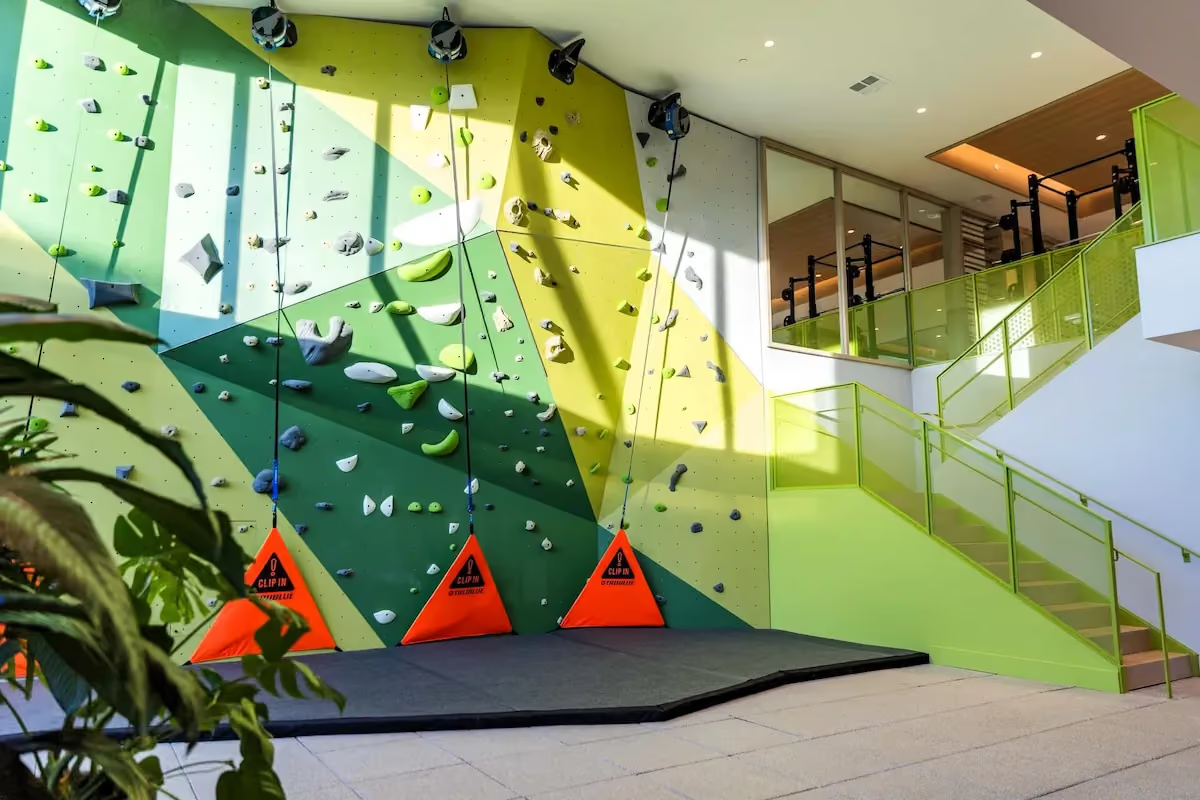
A climbing wall, for example, can function as a primary attraction while also supporting youth programming, instructional classes, competitions, camps, corporate events, and community programming. The same physical infrastructure can therefore support multiple revenue opportunities.
Consider the full revenue ecosystem
Depending on the facility type, those opportunities may include:
- Memberships
- Day passes
- Classes and instructional programs
- Youth programs and camps
- Personal training
- Competitions and events
- Corporate team-building
- Birthday parties and private rentals
- Retail
- Food and beverage
- Premium amenities
- Facility rentals
The objective is not to force every possible revenue stream into one building. It is to identify complementary uses that share infrastructure, audiences, and operating resources.
Design for Multiple Audiences
A multi-use recreation space becomes more valuable when it can serve different audiences without feeling generic.
A university recreation center, for example, may need to serve:
- Students
- Faculty and staff
- Competitive athletes
- Beginners
- Families
- Campus organizations
- Prospective students
A community recreation center may have an equally broad audience, from children and families to adults and older users.
Climbing works especially well in these environments because it can be configured for different experience levels and programming needs. A facility might combine:
- Technical climbing areas for experienced users
- Bouldering areas for accessible, social climbing
- Training zones for performance-focused users
- Youth climbing areas for camps and instructional programs
- Freestanding boulders or towers for high-visibility recreational experiences
The result is not just a climbing area. It is a flexible recreational asset that can support multiple user groups.
Create Complementary Activities, Not Competing Ones
The strongest multi-use facilities are not just collections of unrelated amenities. Their spaces reinforce one another.
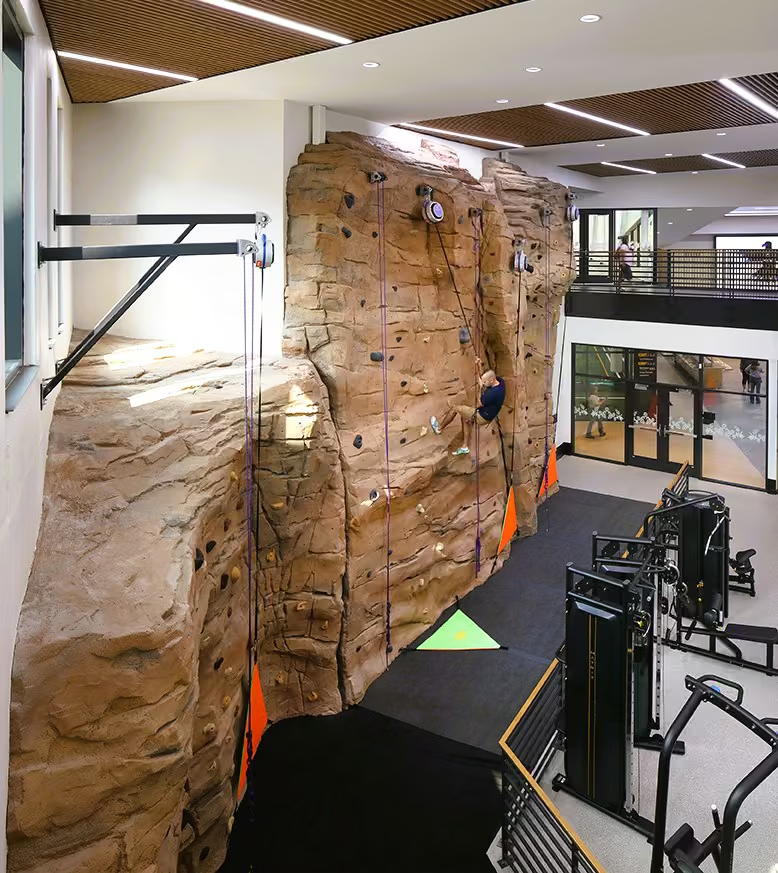
Climbing pairs naturally with activities such as:
- Strength training
- Yoga
- Mobility
- Recovery
- Group fitness
- Outdoor recreation programming
- Social spaces
For example, a climber may use a strength area to improve performance. A yoga studio can support mobility and recovery. A social area can encourage people to stay longer and connect with other members.
Together, these elements help position the facility as a lifestyle hub rather than a collection of individual rooms. That distinction matters because when amenities support one another, customers have more reasons to stay engaged and more reasons to maintain a membership.
Design for Different Times of Day
Another major advantage of multi-use recreation design is the ability to increase utilization throughout the day. Different audiences naturally arrive at different times, which means the same facility can support different experiences across one schedule.
The exact schedule will vary by facility, but the principle stays the same: design the building so demand can move through the space throughout the day. A facility that only performs during peak evening hours is leaving valuable capacity underused.
Make Climbing a Flexible Revenue Generator
Climbing walls can be especially effective in multi-use recreation facilities because they support far more than open climbing.
A well-planned climbing environment can accommodate:
- Open climbing
- Introductory classes
- Youth programs
- Camps
- School groups
- Competitions
- Team training
- Corporate events
- Community events
- Private parties
That flexibility allows operators to build multiple programs around the same physical asset.
Eldorado's portfolio includes custom climbing walls, RealRock™ walls, panelized systems, boulders, towers, and professional services such as design, engineering, inspection, and refurbishment. For developers and architects, that creates an opportunity to think about climbing infrastructure early in the planning process instead of treating it as an isolated amenity added at the end.
Think Beyond the Recreation Floor
Revenue optimization is not only about what happens on the activity floor. The surrounding spaces also influence how long people stay, how often they return, and how many activities they participate in.
Consider incorporating:
Social spaces
Lounges, seating areas, cafés, and gathering spaces can encourage members and visitors to stay longer.
Flexible event areas
A multipurpose area can support competitions, workshops, private events, camps, and community programming.
Spectator zones
Visibility can make climbing and other activities more engaging for parents, friends, and spectators while improving the overall experience.
Retail and rental areas
Strategically positioned retail or rental spaces can create added revenue while supporting nearby activities.
Recovery and wellness
Yoga, mobility, recovery, and other wellness offerings can complement high-intensity recreation and increase membership value.
The key is to design these areas as part of the customer journey, not as leftover square footage.
Design for Repeat Visits
Revenue is not maximized by attracting someone once. It is maximized when the facility becomes part of that person's routine.
That makes variety essential. Visitors should be able to return to the same facility multiple times without having exactly the same experience.
For a climbing-focused facility, that might mean changing routes and challenges regularly. For a larger recreation center, it could mean rotating classes, events, programming, and seasonal experiences. This is especially important for family entertainment and recreation facilities, where repeat business is critical.
Eldorado's Kinetix Action Towers, for example, use modular challenges that can be changed or refreshed over time. This allows operators to create new experiences without replacing the entire attraction.
Future-proofing should be part of the original design conversation.
Build Flexibility Into the Original Plan
The best multi-use recreation spaces are designed for what a facility needs today and what it may need five or ten years from now.
Before finalizing a design, consider whether the space can:
- Support multiple programming formats
- Allow equipment or challenges to be updated
- Accommodate different age groups
- Handle future membership growth
- Adapt programming without major construction
- Support inspection, maintenance, or refurbishment of existing infrastructure
- Expand or reconfigure high-demand areas
This is where thoughtful engineering becomes a business advantage. A climbing wall or recreational structure is a long-term capital investment, and designing for durability, flexibility, and lifecycle support can help owners get more value from that investment over time.
The Best Recreation Facilities Function as Ecosystems
Multi-use recreation design is not about putting as many amenities as possible under one roof. It is about creating an ecosystem of experiences where activities, spaces, programs, and users reinforce one another.
The most effective facilities:
- Maximize the value of each square foot
- Serve multiple audiences
- Create complementary activities
- Support multiple revenue streams
- Increase utilization throughout the day
- Give customers reasons to return
- Allow the facility to evolve over time
For architects, developers, universities, and recreation operators, this approach can transform recreation space from a cost center into a strategic asset.
Planning a Multi-Use Recreation Facility?
Eldorado Climbing Walls helps organizations integrate climbing infrastructure into commercial, institutional, and recreational environments, from early design and engineering through installation, inspection, and refurbishment.
Whether you are developing a university recreation center, community facility, family entertainment center, or hybrid fitness destination, the right climbing solution can become more than an attraction. It can become an integral part of the facility's revenue and engagement strategy.