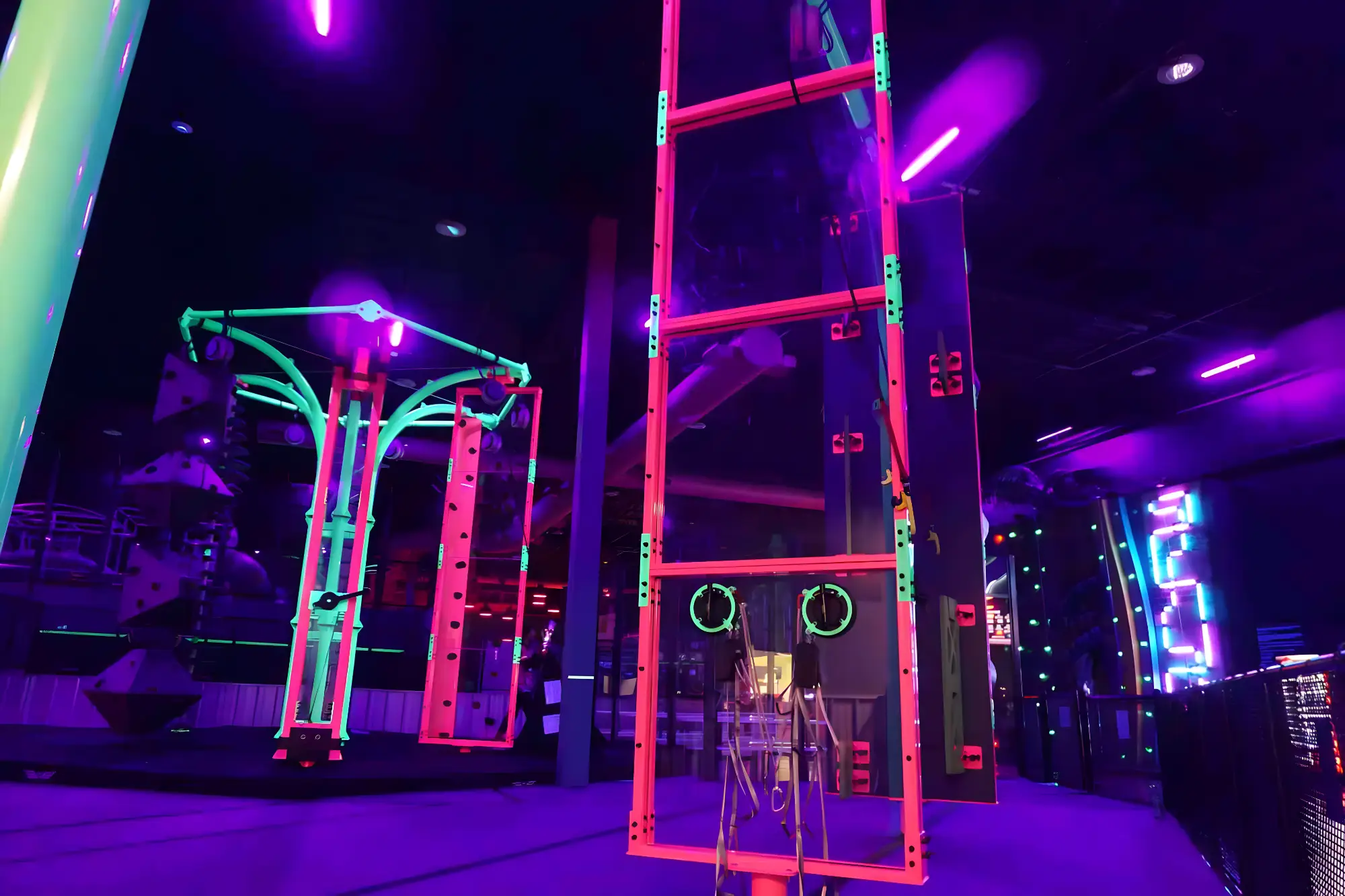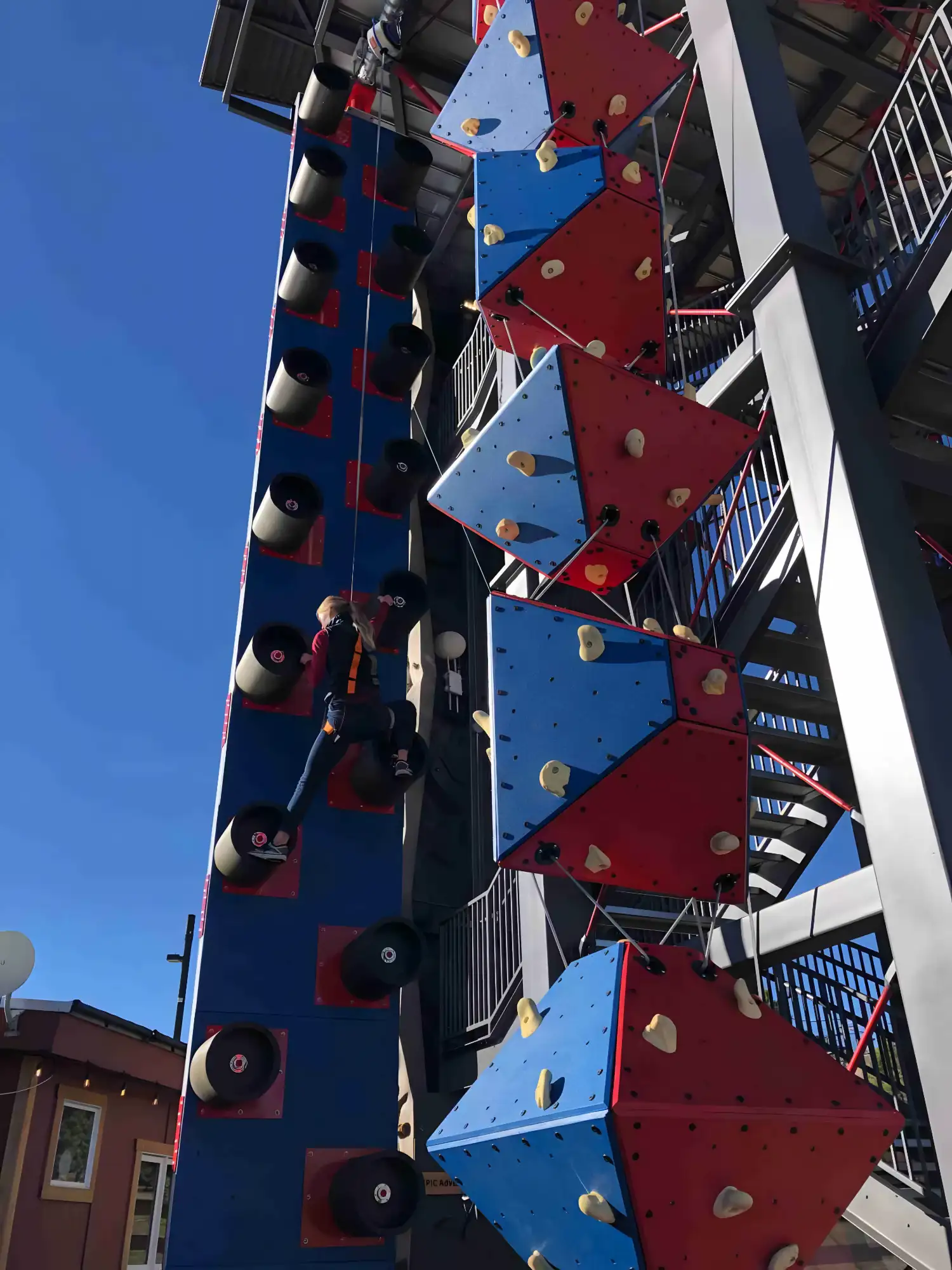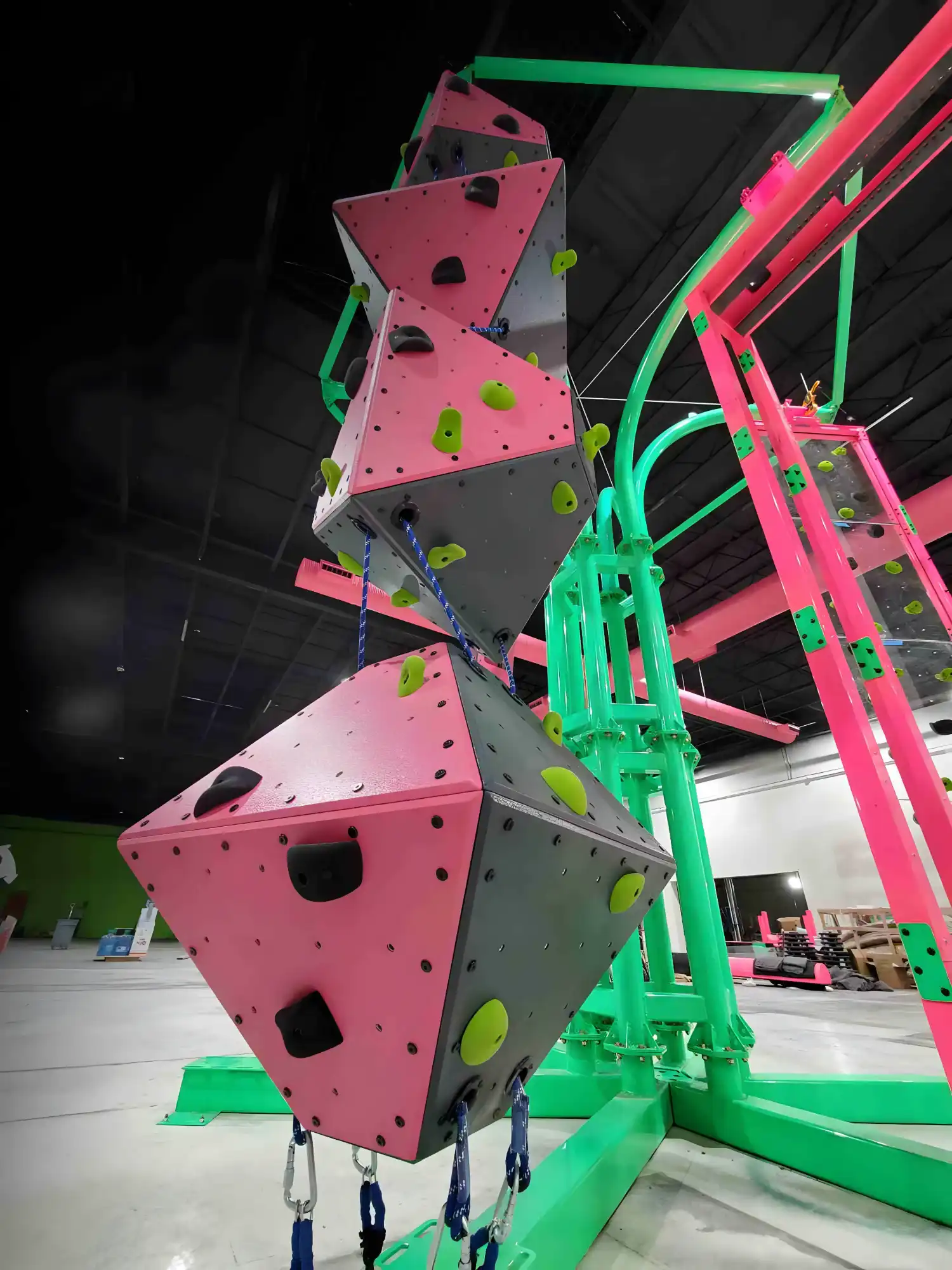




Kinetix Action Towers

The Tower: the Super-Structure of Kinetix Action Towers

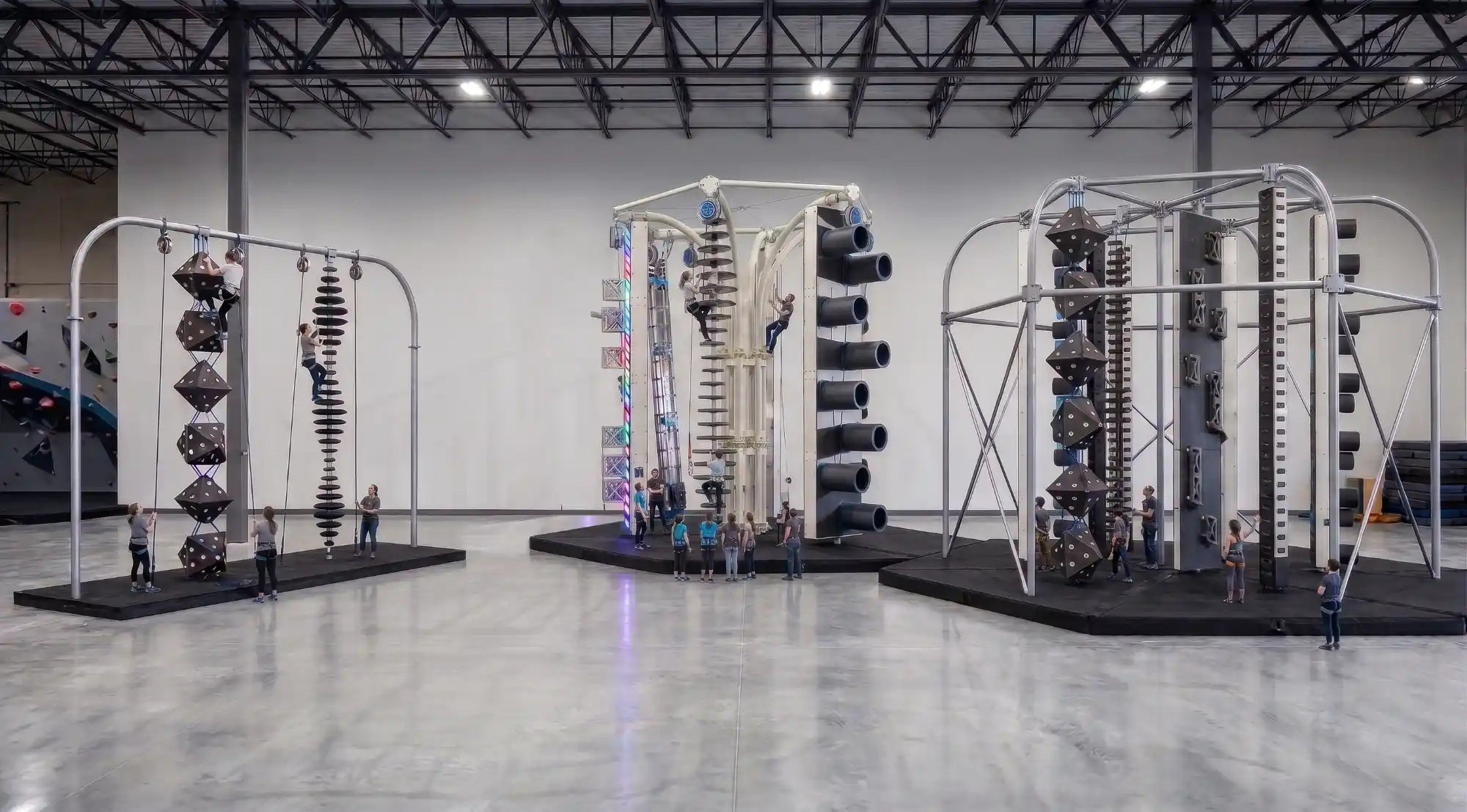
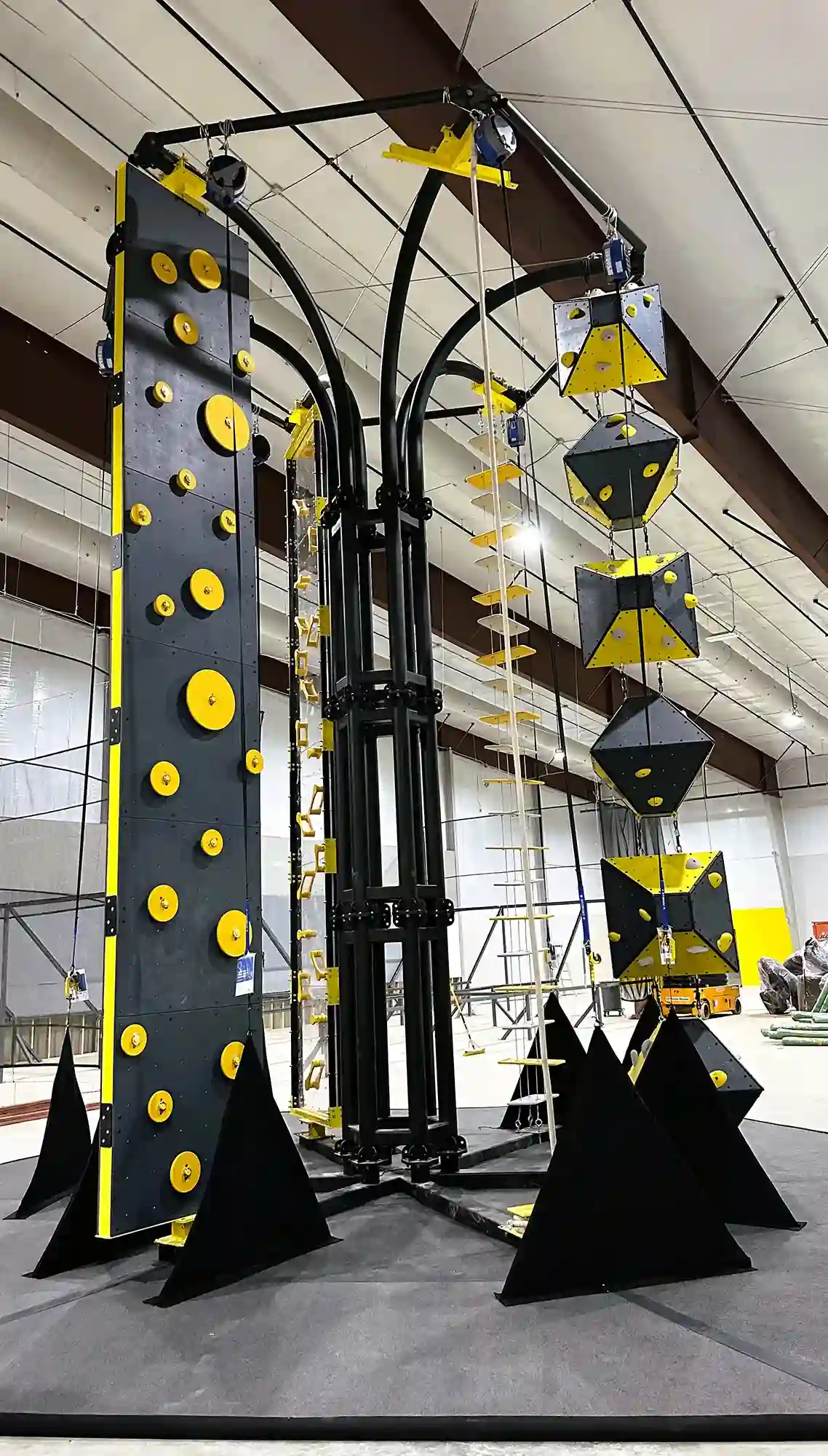
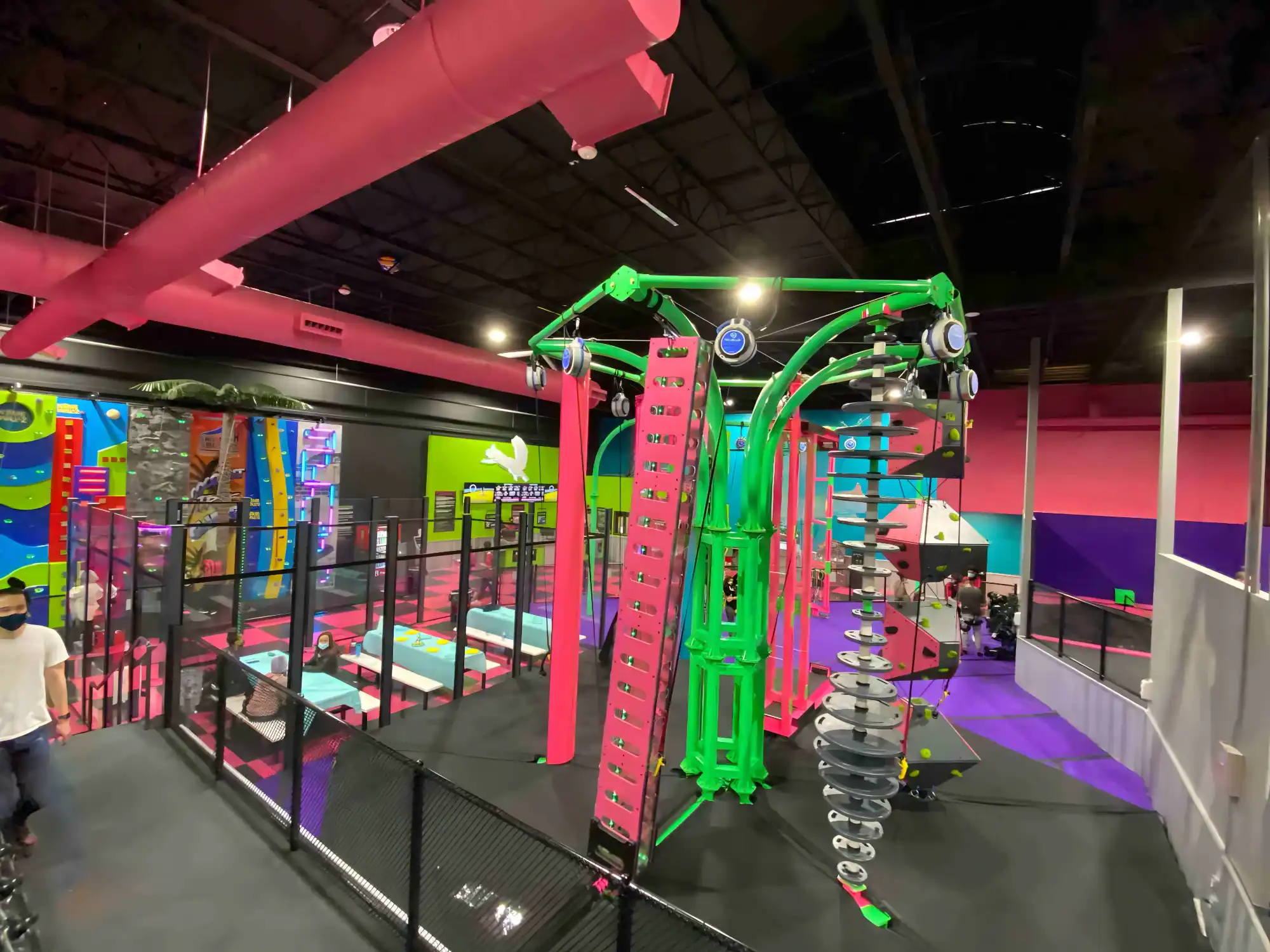
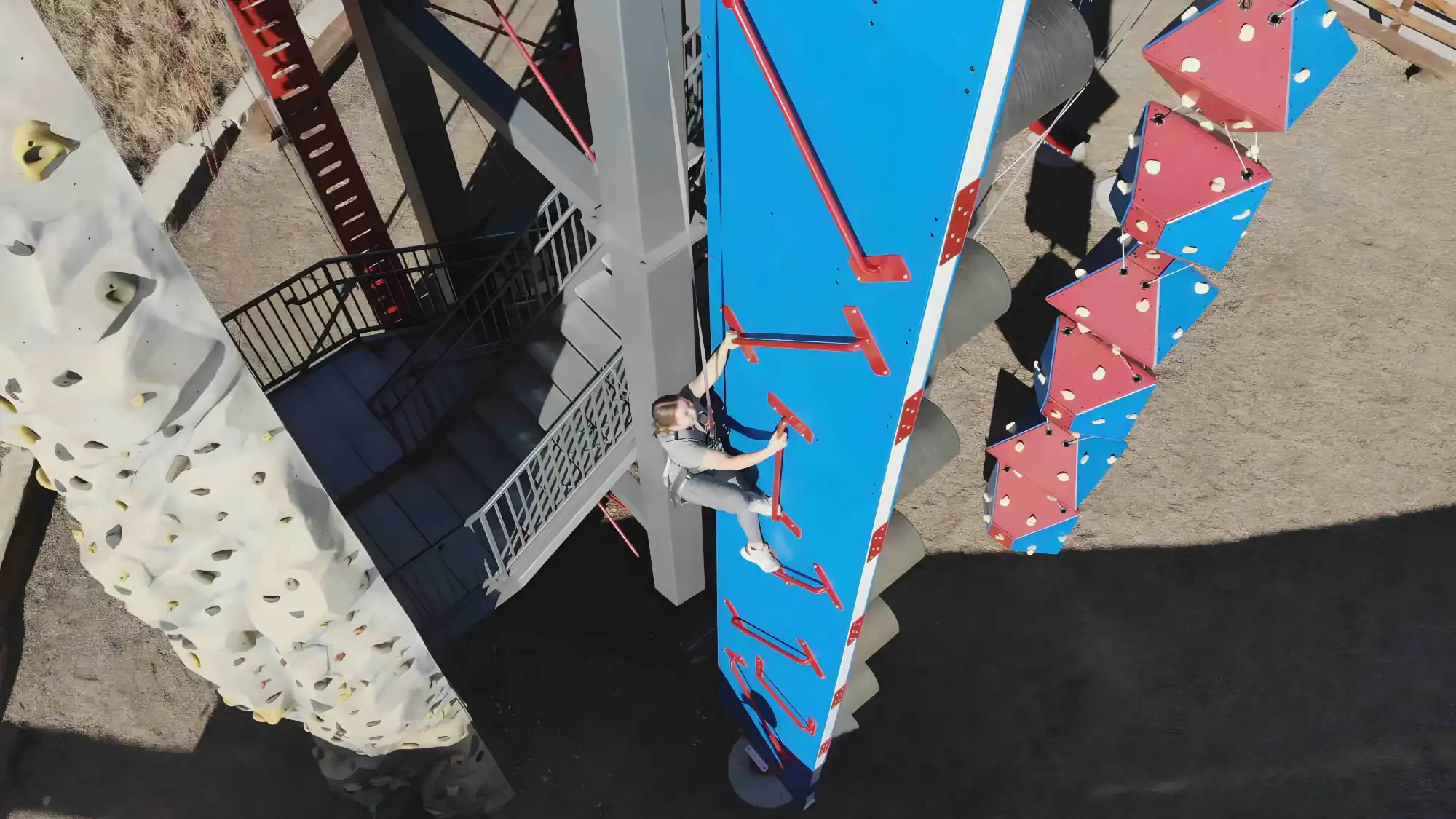
Three freestanding tower types in four heights — the structural backbone that carries your Challenges and Climbponents. Pick the footprint, throughput, and budget that fit your facility.

Children climbing on a large outdoor climbing boulder surrounded by green hills and a ski lift in the background.

Types of Towers

3 Tower Options

Each tower is engineered for a different priority — volume, footprint, or budget. Most facilities mix more than one.

Towers

The structures to which Challenges are attached.
+

Challenges

The climbing activities -over 30 available.
+

Climbponents

The features that bolt onto every Challenge.
Gray angular climbing boulder with multiple bolt holes on a blue background.Large angular artificial climbing boulder with handholds against a blue background.Large angular artificial climbing boulder with handholds against a blue background.Three large, geometric climbing boulders set outdoors on wood chips with trees and mountains in the background at sunset.
Maximum Throughput
The Canopy

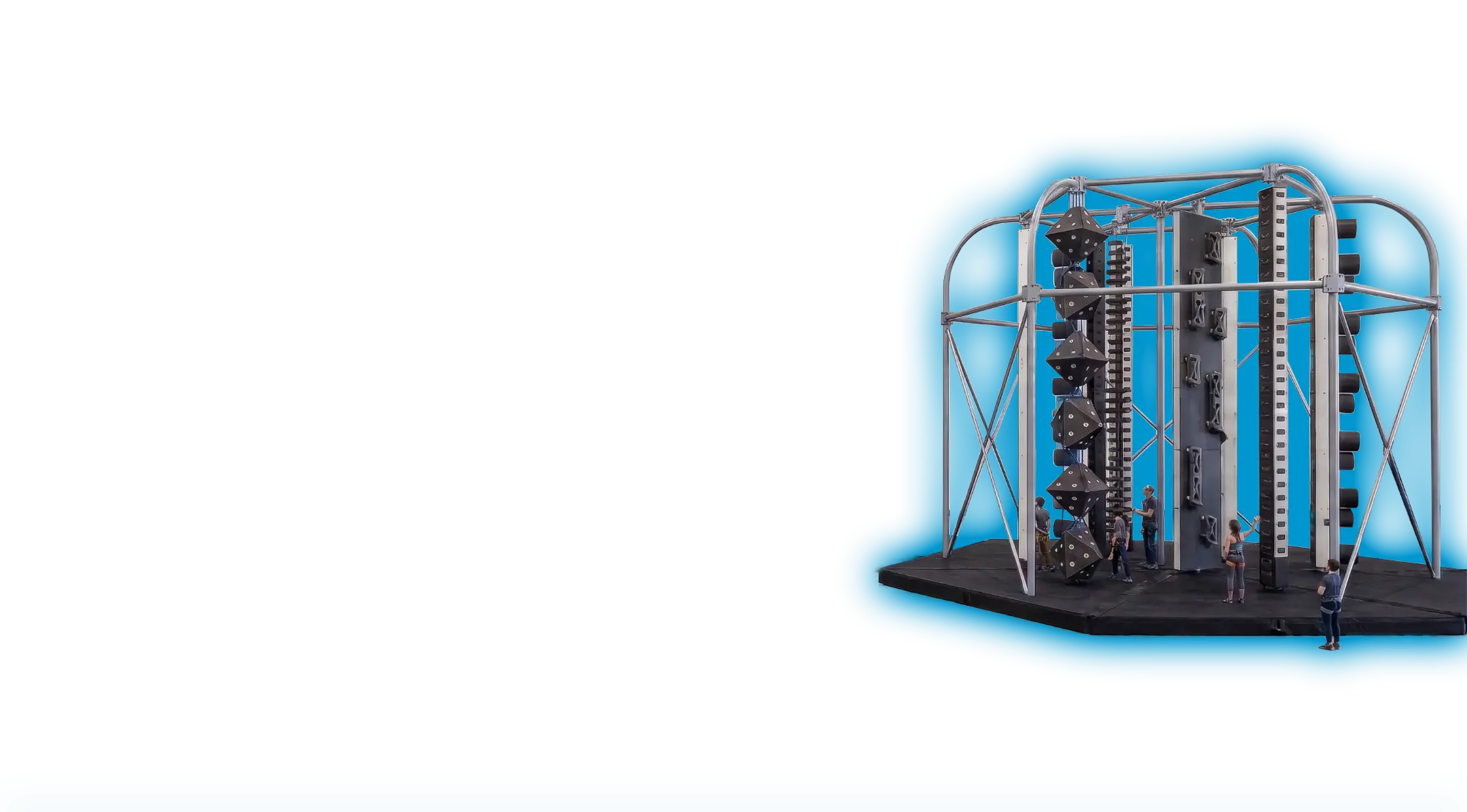
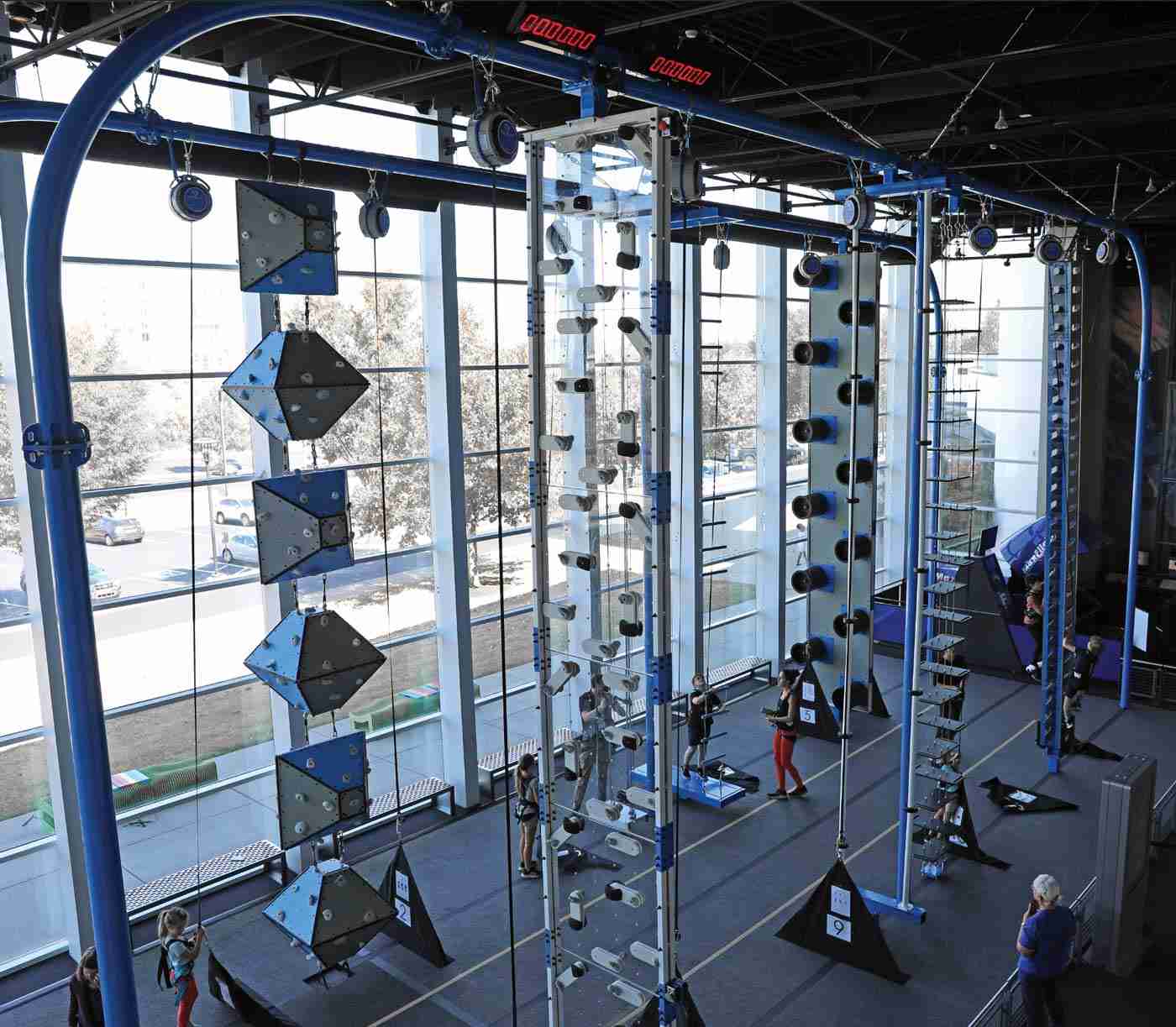
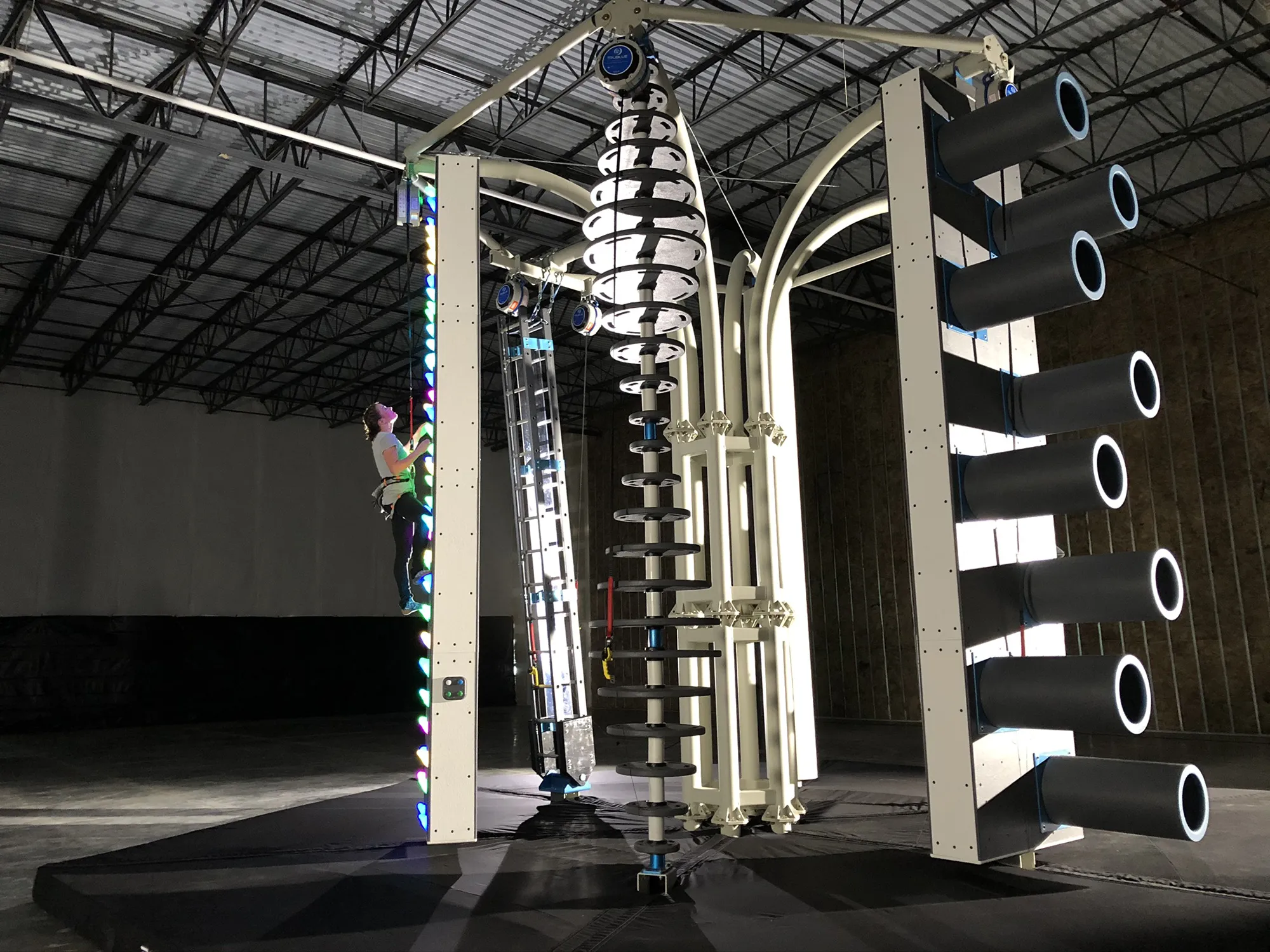
The Canopy is designed for the most climbers per square foot. Its layout has the most simultaneous climbing lanes of any tower, so lines stay short and climbs-per-hour stay high.

Highest climber capacity of the three
Open, multi-lane configuration
Built for high-traffic, ticketed, or membership settings
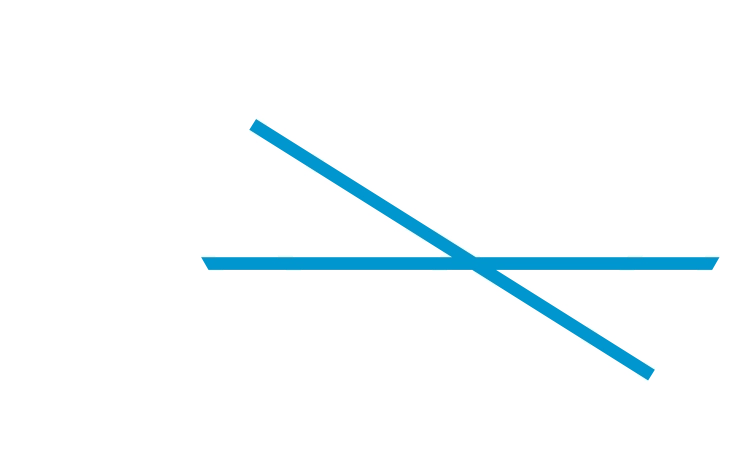
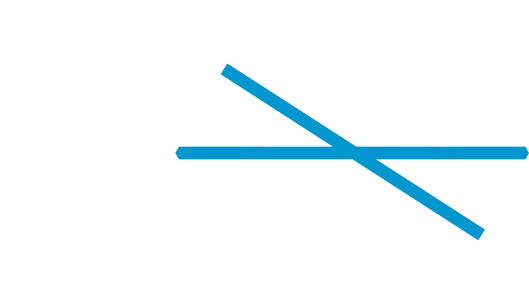
Diagram showing canopy height and light intensity with lines slanting opposite to each other.
Cost Effective
The Arch

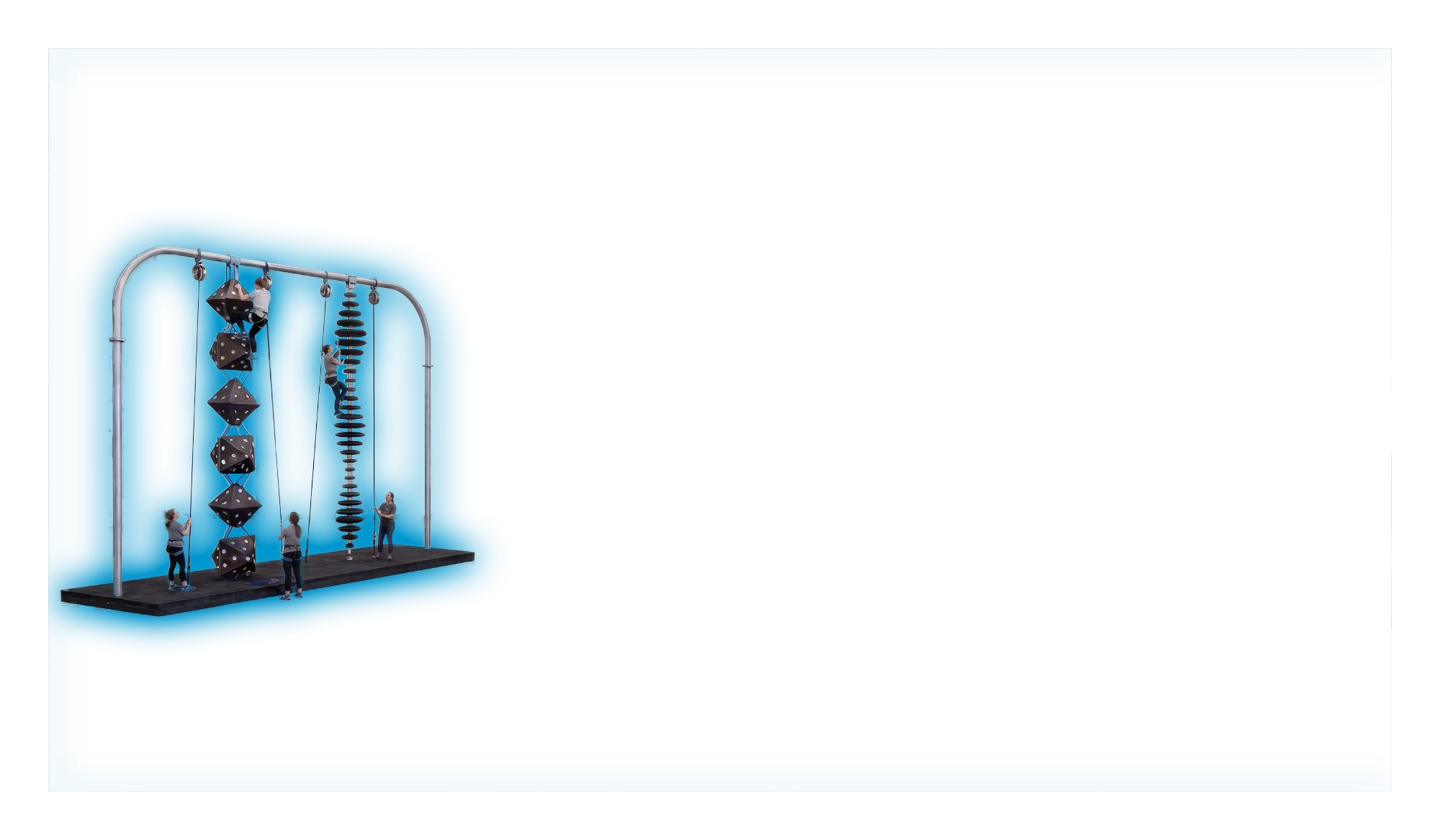
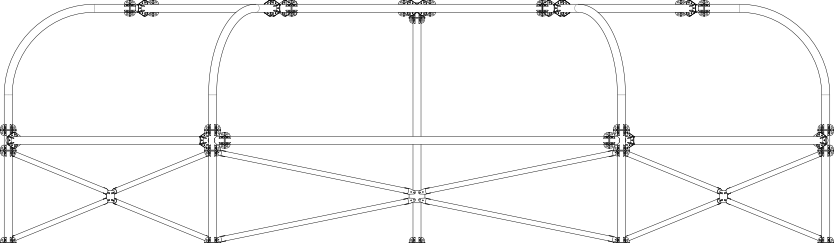
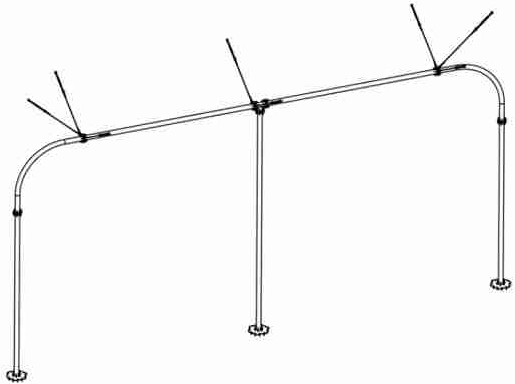
The Arch is the linear option. Its narrow, footprint fits into corridors, along perimeter walls, and 'leftover' floor spaces that wider towers can't use — at the lowest entry cost of the three.

Lowest-cost entry point
Fits narrow and linear spaces
Ideal for perimeter placement and constrained floor plans
Architecture diagram showing overall website structure with header, main content, and footer in blue and grey blocks.
Best Seller
The Tree

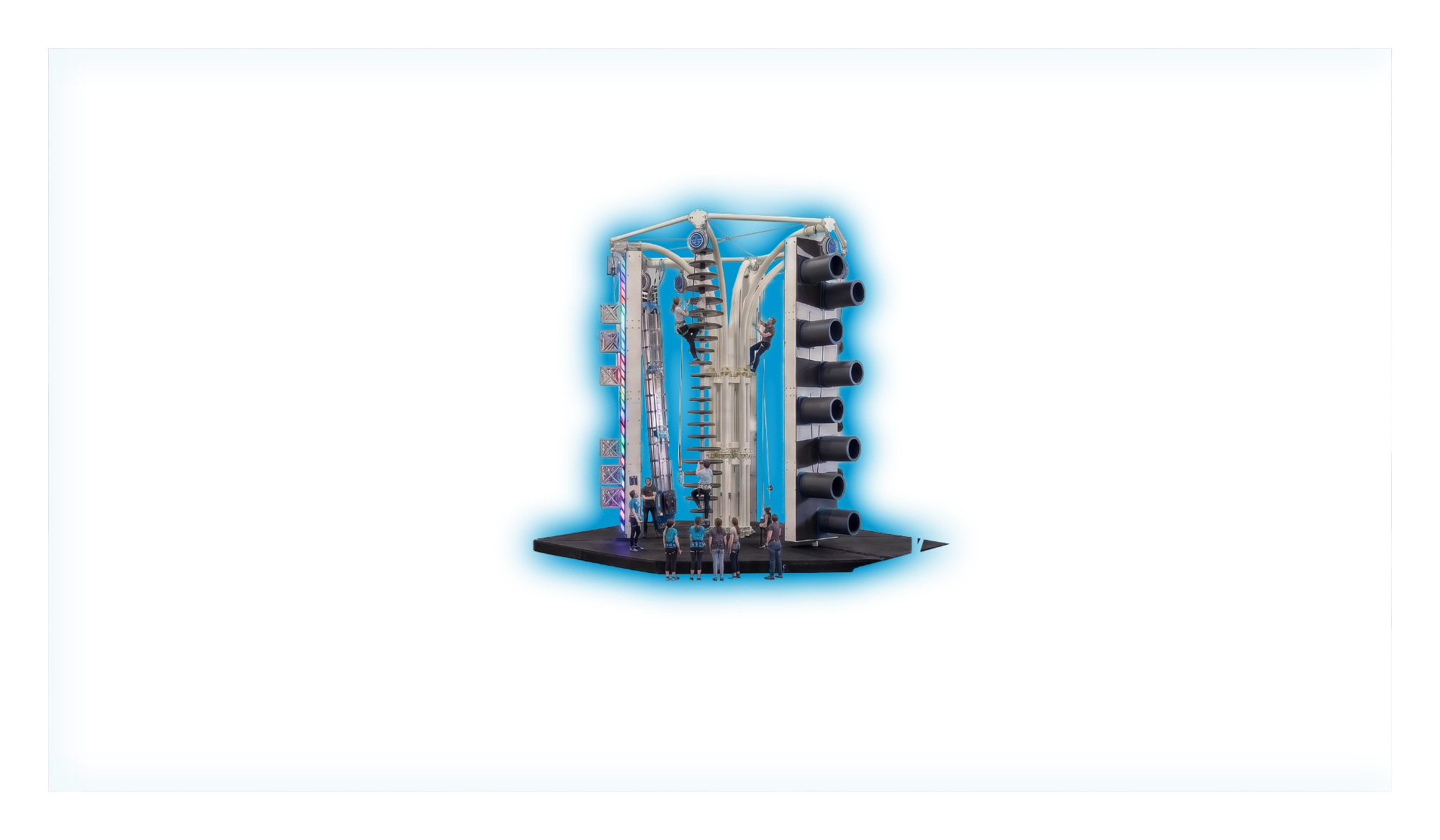
The Tree earns its place most often. It carries a full range of Challenges in a compact, sculptural form that reads as a centerpiece from across the room — the tower people photograph and post.

Space-efficient footprint with full Challenge variety
Sculptural, photo-forward profile
The most-specified tower across facility types
Frost wedging diagram showing cracks expanding in rock caused by freezing water.
This image is generated by a machine for human purposes.

Choose the size

4 Heights to
Choose From

Every system is available in four standard heights, so the tower scales from a low-ceiling studio to a flagship atrium.

14ft

(4.27 m)

Low-ceiling and studio
spaces. Bouldering only.

18ft

(5.49 m)

Designed to fit in 2-story
high spaces.

22ft

(6.71 m)

High-throughput FECs
and resort attractions.

26ft

(7.92 m)

Signature centerpiece
— built to be seen.

Kinetix Tower VS. Traditional Wall

What a Kinetix Tower Does
That a Wall Can't

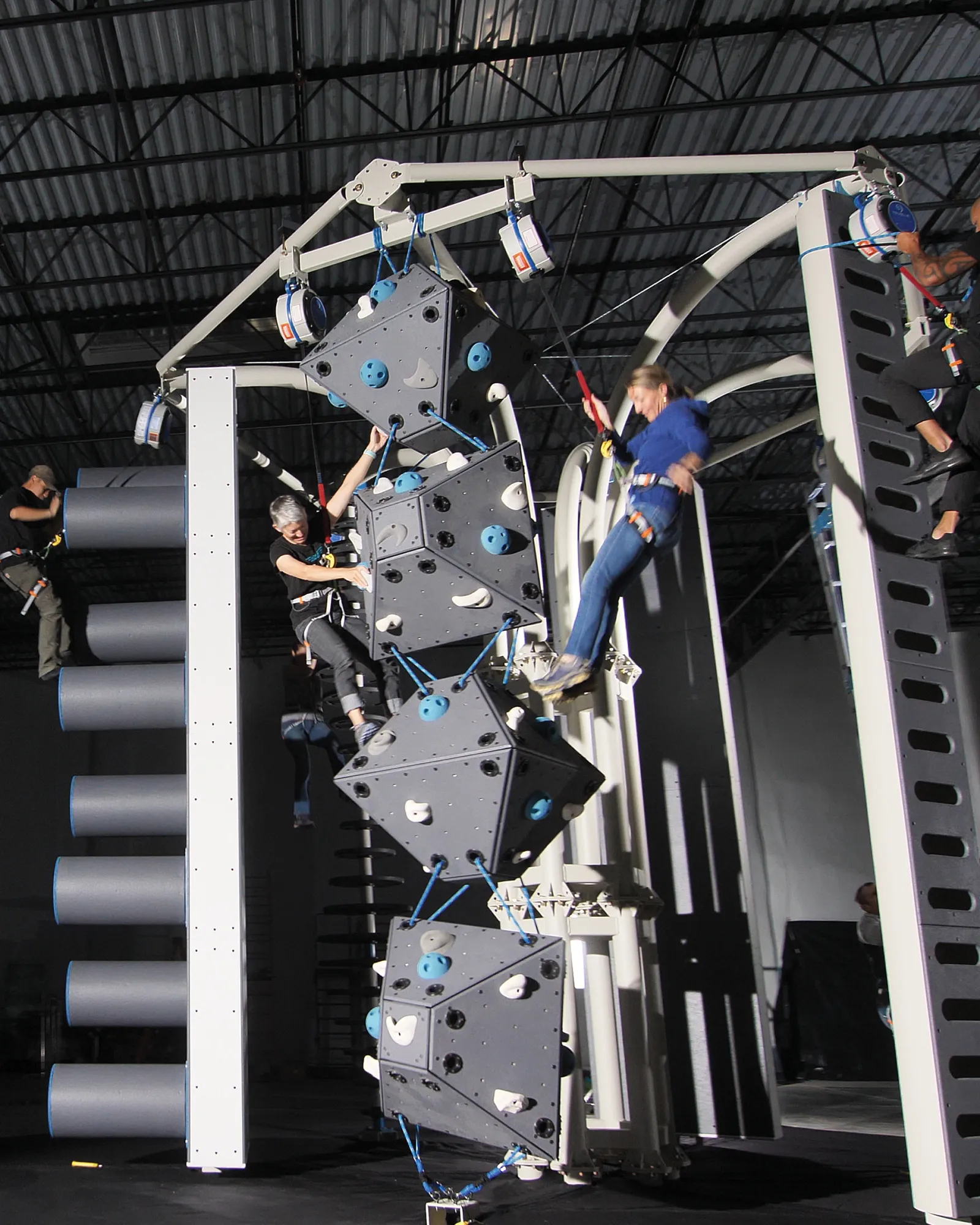
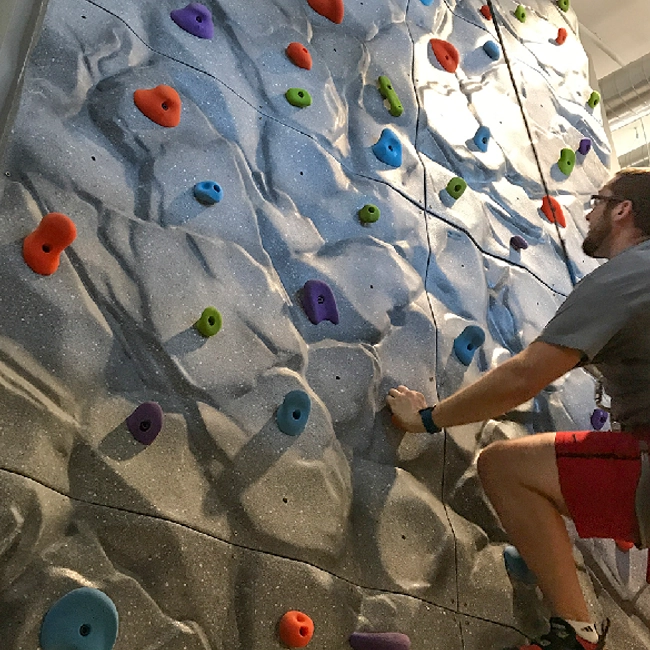
A standard climbing wall is a fixed surface you set routes on. A Kinetix tower is a different kind of attraction. It stands on its own floor space, most of the Challenges move (Kinetix -get it?), both the Challenges and the holds or Climbponents on the Challenges can be changed or swapped out, and the activities support easy to hard ascenion difficulty. Most importantly, Kinetix Action Towers pull in guests who'd never rope up on a conventional wall.

Stands on it's own

A tower stands anywhere on the floor; a panel wall needs a building to mount to.
Two men assembling a large blue and yellow wooden structure outdoors on grass near a school building.

Change the obstacles, not just the holds

Whole Challenges reconfigure and Climbponents swap out, so the climb itself changes, not only the route-set.
Four children climbing a black outdoor bouldering wall with colorful holds and safety mats underneath at a playground.

Throughput built into the layout

Multiple lanes around the structure accommodates many climbers at once, where a flat wall is a single plane.
Close-up of corner joint on a pre-engineered panel secured with metal fasteners above brown wood mulch.

Draws more than climbers

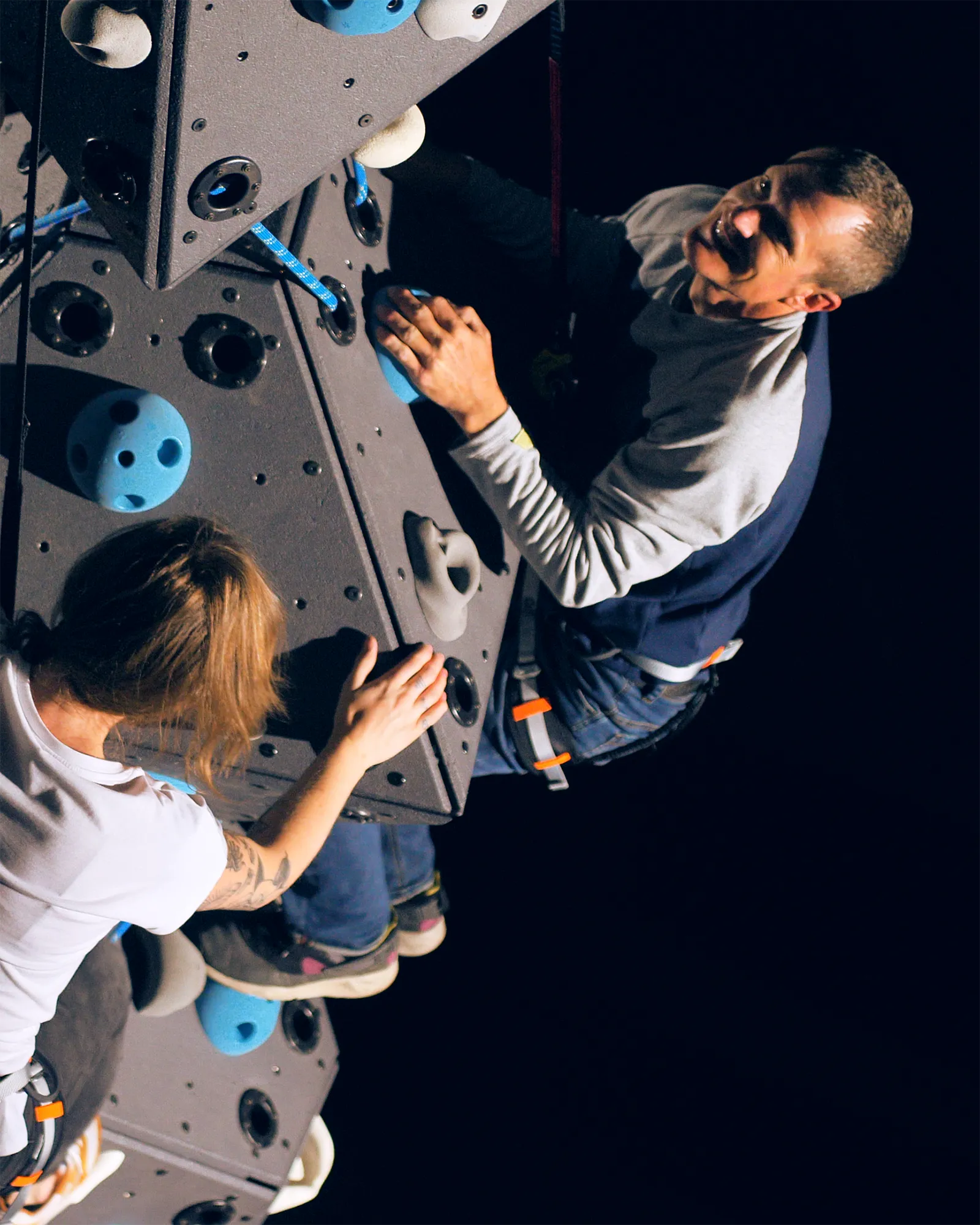
Spinning, swinging, and wobbling Challenges read as play, pulling in guests who'd skip a standard wall.
People climbing on three outdoor bouldering walls with red, yellow, and blue holds in a park setting.

One structure for every ability

An easier and a harder path share each lane, so beginners and experts climb the same tower side by side.
Man crouched outdoors working with tools on a large metallic structure surrounded by wood chips.

Auto-belay native

Engineered around TRUBLUE for low-staff operation, instead of leaning on belayers or spotters.
Six children climbing on three large geometric outdoor bouldering walls in a park during golden hour.

Vertical, not linear

High participants per square foot where a wall needs length, so a modest footprint still delivers capacity.
Close-up of beige exterior wall panels with visible fasteners and textured surface.

Indoor or Outdoor

Finishes and hardware rated for either environment.

Ages 4 and up

Kinetix Action Towers are designed for ages 4 and up

Auto-belay Ready

Designed around TRUBLUE auto belays for low-staff operation.

Pre-engineered

Proven structures with stamped drawings to speed permitting and review.
Compare Tower Systems

Side by Side Comparision

Where the three differ — so you can match the tower to your priority.

The Arch

Freestanding outdoor climbing boulder with various handholds in shades of gray and white.

The Tree

Freestanding outdoor climbing boulder with various handholds in shades of gray and white.

The Canopy

Large gray boulder with rough texture and a small heart-shaped white mark on its surface.

Standout strength

The lowest cost to get started
Sculptural centerpiece; best-selling tower
The most simultaneous climbing lanes

Climbers at once

4–8
9
18

Challenges (climbing routes)

2–6
6
12

Footprint

Linear, 35–75 ft (10.4–22.9 m) long, ~12 ft (3.7 m) deep
Hexagonal, ~28–32 ft (8.5–9.8 m) across
Hexagonal, ~42–49 ft (12.8–14.9 m) across

Mounting

Requires wall or ceiling attachment
Freestanding
Freestanding

Relative Cost

$$$
$$$
$$$
Explore the System

The Tower is
Just the Start

The tower sets the structure, height, and footprint. What climbers actually climb on lives in the other two parts of the system. Build out from here.

Already have a climbing wall?

Inspections

Magnifying glass with a black handle and a large, clear lens.
Ensure safety, compliance, and optimal performance of your asset with expert climbing wall inspections.

Refurbishment

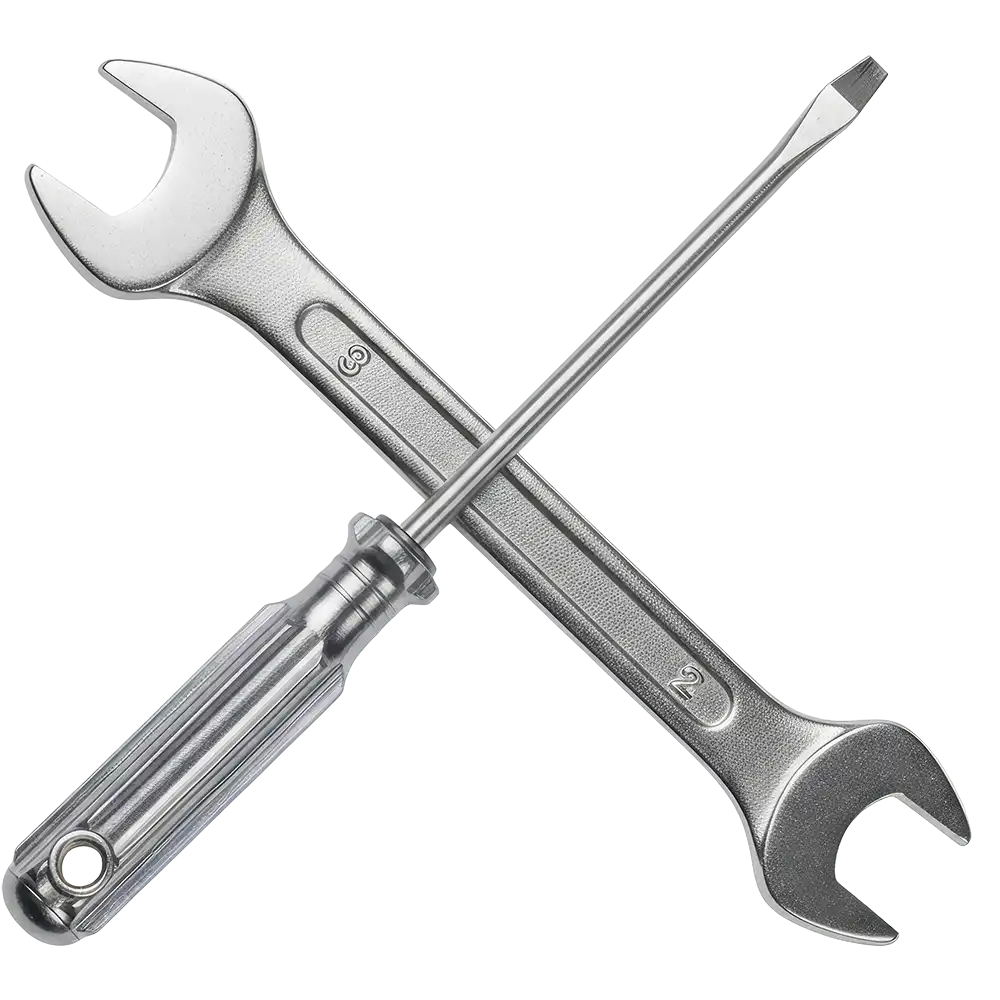
Crossed silver open-end wrench and flat-head screwdriver on a white background.
Modernize your climbing facility for a fraction of replacement costs. Add 10+ years to the life of your  walls and make changes your members will love.

Route Setting

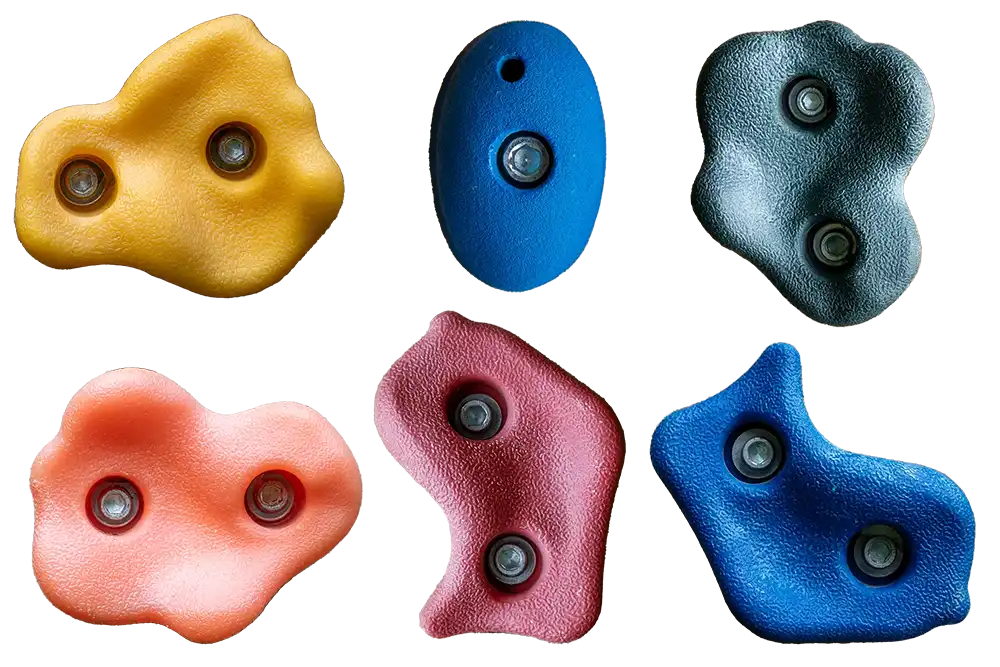
Six colorful rock climbing holds in various shapes and colors including yellow, blue, black, orange, red, and dark blue.
Keep climbers engaged with fresh, expertly set routes by USAC-certified setters, designed for all skill levels.
Faqs

Frequently Asked Questions

How much floor space does a tower need?
It depends on the tower type and height available. The Arch fits narrow, linear runs; the Tree needs a compact open footprint; the Canopy needs the most room for its lanes. As a reference, a single Tree takes up 900 ft², while a full multi-tower park typicaly maxes out at 10,000 ft². We provide a layout drawn to your actual space at no cost.
What does a tower cost?
Pricing depends on the tower type, height, and the Challenges and Climbponents you select. The Arch is the lowest entry point; the Canopy sits at the top end on capacity. Towers are quoted per project — contact our sales team for an estimate built around your configuration.
Do I need a tall building or a structural wall?

The Canopy and Tree are freestanding and need no load-bearing wall. The Arch is the exception — it connects to a floor and ceiling. All three come in four heights down to 14 ft, so they fit spaces with limited ceiling clearance.

Can it go outdoors?

Yes. Towers are available with finishes and hardware rated for outdoor installation, which suits resorts, adventure parks, and seasonal venues.

How many staff does it take to run?
Standard layouts are designed around roughly one staff member per nine climbers, and the towers are built for auto-belay operation. So, a small team can supervise a lot of simultaneous climbers.
Who can climb a Kinetix Action Tower?
Towers are designed for ages 4 and up. Every Challenge offers both an easier and a harder path on the same lane, so beginners and experienced climbers use the same structure. Truly designed to be fun for the whole family.
Can we change how our action tower is configured later?
Yes — the modular design makes changing things up over time easy. Challenges reconfigure and Climbponents swap out, so you can refresh the experience without replacing the structure.
How long does installation of a Kinetix Action Tower take?
Most tower installations take a few days to a few weeks depending on configuration and site. Pre-engineered structures with stamped drawings help move permitting and review along.
Your Cart
Product Name
Option 1 / Option 2 / Option 3
Weekly Delivery
Product Discount (-$0)
COUPON1 (-$0)
$0
$0
-
Thank you! Your submission has been received!
Oops! Something went wrong while submitting the form.
+
Coupon1
Coupon2
Success message won't be visible to user. Coupon title will be listed below if it's valid.
Invalid code
Subtotal
$0
Checkout